
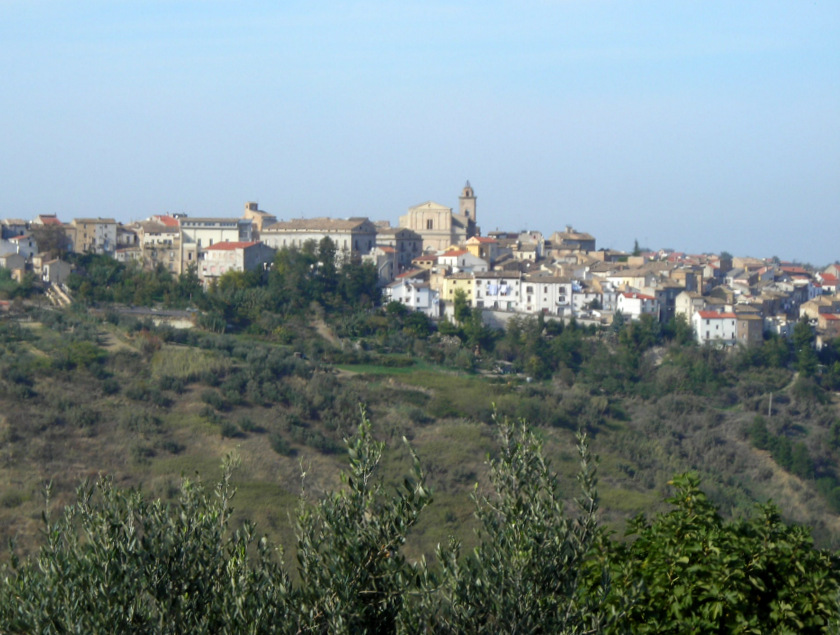
Scerni is a quiet, peaceful town of 3,000 people nestled along the crest of a gentle hill. It sits in the hilly countryside of the Chieti province. Located 276 meters above sea level, Scerni boasts a mild, inviting climate. The average January temperature is 6 °C (43 °F), and the average August temperature is 24 °C (75 °F).
Scerni has a rich history dating back to Roman times and the feudal system of the Middle Ages. The town was also located on one of Italy’s major ancient transhumance trails.
Transhumance is the seasonal migration of livestock along grassy tracks or tratturi between lower valley pastures in the winter and higher mountain pastures in the summer. Scerni lies on the transhumance trail between the Abruzzo mountains and the region of Puglia. Traditionally, it was an overnight resting place for shepherds and their sheep.
Scerni is known for producing extra-virgin olive oil, fine wines, and Ventricina sausages, a specialty of the region. However, the town is most famous for its tradition of eating snails, known locally as ciammariche. The townspeople’s love of snails is celebrated with a festival dedicated to them. Snails are a favorite dish at most of the town’s festivals, alongside other regional specialties.

Typical Cuisine
Evidence of the transhumance heritage can be seen in some local dishes and food festivals. Other traditional dishes stem from Abruzzo’s peasant farming traditions. Most of these dishes are featured at local festivals and many are typically made for Christmas and Easter.
- Pallotte Cacio e Ova: Soft bread balls made with stale bread, local cheese, and eggs, that are fried and cooked in a simple tomato sauce. This dish was created by shepherds and farmers as an affordable and filling meal.
- Pecorino and Local Cheeses: Sheep’s milk cheese provided vital calories and protein for shepherds on the move. Aged pecorino cheese was easy to carry and stored well during long seasonal journeys.
- Arrosticini: Grilled lamb, typically made by skewering chunks of lamb meat. Shepherds invented this dish to minimize food waste, especially while traveling the transhumance trail.
- Ventricina sausage: A dry, fermented pork sausage that is pressed and seasoned with powdered sweet pepper and fennel powder, then encased in a dried pig’s stomach.
- N’durciullune: A very thick homemade pasta alla chitarra, often served with mutton sauce.
- Sagne a Pezzi (Tacconelle): Diamond-shaped pasta pieces made from flour and water. They are served in a light, fresh tomato sauce with garlic, basil, and pecorino cheese.
- Fiadone: Savory or sweet baked pastries shaped like a half-moon or a large ravioli. Savory versions are stuffed with hard cheeses, such as pecorino, while sweet versions contain ricotta. These are a traditional Easter dish.
- Horse and doll cakes: Dry chocolate cakes shaped like horses or dolls. These are traditionally made at Easter-time as gifts for children.
- Cagionetti: Fried fritters filled with grape jam and typically served at Christmas.
- Cercichietti: These traditional Easter or Christmas treats are little round balls of fried dough covered with honey and cookie sprinkles.
- Tarallucci: Baked round jam-filled sweets that are shaped like half-moons that are especially popular at Christmas and Easter.
- Pizzelle: Thin, crisp waffle cookies flavored with anisette that are very popular at Christmas and Easter.
Places to visit

Scerni’s Churches
The historic churches of Scerni are closely linked to the ancient tradition of transhumance. During their biannual migration, shepherds relied on sanctuaries, rural chapels, and water sources maintained by local communities for shelter, blessings, and trade.
- The Church of San Giacomo: A rural neighborhood church, located in the hamlet of the same name. Historically, it served as a welcome refuge and spiritual stop for transhumance shepherds and their flocks following the sheep tracks.
- The Madonna della Strada: This modern santucary, built in the 1960s, was built on the ruins of an old church from the 1400s. Nomadic shepherds built the original chapel there to pray for the Virgin Mary’s protection during their long, arduous treks along the transhumance tracks.
- The Church of San Panfilo: The main parish church sits in the historic center of Scerni and dates back to 1324. It houses priceless sacred artifacts reflecting the wealth that pastoralism and agricultural trade brought to local religious institutions over the centuries. It is neoclassical in style and features a baroque bell tower and an 18th-century organ.
Historic buildings
Archaeological evidence and local histories suggest that the area has been inhabited since well before the formal establishment of the medieval town. The main historic church, the Church of San Panfilo, was likely built directly over the remains of an older Roman temple.
During the Middle Ages, several castles and fortifications were built in and around the city. Scerni’s three main historic buildings, all located in the same town square, reflect the town’s important feudal period.

- The D’Avalos Castle: Built by the Marquis D’Avalos in the 16th century, it was a fortified palace. Its high walls once surrounded and protected the town’s historic center. Only two of the towers and the main entrance gate still remain today.
- The 18th-century Raimondo Palace was part of the D’Avalos complex the main building of the Palazzo D’Avalos. Originally built as a residence, the brick building features large reception rooms with beautiful frescoed ceilings, an arched main gateway, and an old subterranean cistern used for storing water. The palace was once used as the town hall. Today, the building serves as a community hub housing the parish rectory and various local cultural associations.
- The Palazzo De Riseis: This baronial palace was built in the 18th century on the site of an old castle. It has a rectangular layout, a hipped roof, and a combination of dry stone masonry and plastering. The palace once housed an extensive private library.
A historic school
Also noteworthy is the “Cosimo Ridolfi” Agricultural Technical Institute. Founded in 1879 by royal decree, the institute is much more than a typical school. Operating as a working farm, it produces wine and oil on a 20-hectare estate that includes a forest and a pond. The school has modern labs, vineyards, a boarding facility, and an on-site winery and oil press. Zootecnia (animal production) is part of the curriculum and the school features an attached educational farm setup.
During our most recent town festival, Le Ruelle, students and professors of the school presented an agricultural exhibition in celebration of the school’s 150th anniversary. The colorful exhibit featured the richness of agricultural biodiversity, with over 400 varieties of tomatoes. Who knew there were that many?! They also displayed 600 varieties of durum wheat from all over the world.
Festivals
- Le Ruelle di Lu Paese: This mid-August event transforms the narrow streets and alleys of the historic center into an immersive path filled with music, local wine, and traditional transhumance cuisine, including pallotte cace e ove and arrosticini.
- The Ciammaiche Days is Scerni’s festival dedicated to land snails which are prepared according to ancient peasant and transhumance recipes. In March, local restaurants offer special menus featuring this delicacy alongside regional Abruzzo wines.
- The Proloco Festival: This festival, which is sponsored by the Chamber of Commerce, takes place over the course of five consecutive evenings in early August. It is held on the Hill of Sighs (Colle dei Sospiri), so-called because of the refreshing breezes that blow across it. The festival features live music, dancing, and local cuisine, including smoked caciocavallo cheese and fresh regional pasta.
- The Festival of Ventricina: is dedicated to the Slow Food movement and the area’s famous ventricina sausages. The festival features tastings, masterclasses, and lessons on local pairings. Local pairing is the traditional culinary practice of matching regional foods with the local wines.
- The San Panfilo patron saint festival is celebrated every year on April 28 with traditional religious observances.
Getting there
Scerni is easily accessible. It is located just 15 minutes from the Adriatic Sea and the A14 autostrada. The beautiful Maiella mountain range is about 30 miles away and the nearest airport, in Pescara, is only an hour away. Even Rome is just a few hours away by car.
Photo credits: San Panfilo Church by Bubici, CC BY-SA 4.0 via Wikimedia | Palazzo De Riseis by Gspinoza, CC BY-SA 2.5 via Wikimedia | Others are mine.

Leave a Reply